The Yellow Ginger Font: An Artisan's Handwritten Script
In a world saturated with clean, geometric sans serifs and traditional serif fonts, there's a powerful tool for grabbing attention and conveying warmth: a truly authentic handwritten script. This is where Yellow Ginger enters the conversation. It's not just another script font; it's a carefully crafted typeface with a distinct personality. As a designer or brand builder, you know that the right font can make or break a project's emotional connection. Yellow Ginger offers an immediate sense of the personal, the artisanal, and the approachable, making it a standout choice for anyone looking to inject genuine character into their work.
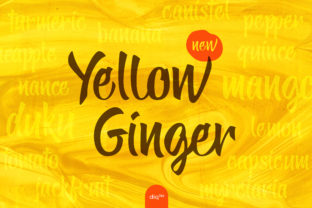
Visually, Yellow Ginger strikes a beautiful balance. Its letterforms flow with a natural, connected rhythm, yet each character maintains impressive clarity. You won't find the frustrating illegibility that plagues many overly decorative scripts. The strokes have a confident, slightly textured quality, as if laid down with a quality brush pen, giving it an organic feel without sacrificing precision. This isn't a wild, chaotic scrawl. It's a premium font built on a foundation of thoughtful design, offering the charm of a personal signature with the professionalism required for commercial applications. The overall appeal lies in this duality—it feels handmade but is engineered for consistency and impact.
Where Yellow Ginger Truly Shines: Real-World Applications
Understanding a font's personality is one thing; knowing exactly where to deploy it is another. Yellow Ginger is a versatile display font, meaning it excels in short, high-impact bursts of text where its character can be fully appreciated. Think of it as the headline act, not the body text narrator. Its strengths are particularly evident in several key areas of modern design.
For brand identity and logo design, Yellow Ginger is a game-changer. It's perfect for brands in the lifestyle, wellness, food and beverage, boutique retail, and artisanal craft spaces. Imagine it on a coffee shop menu, a bakery's logo, or the label for a small-batch skincare line. It instantly communicates a story of care, quality, and a human touch. In packaging design, it can elevate a product from a generic item on a shelf to something that feels special and considered, inviting customers to pick it up and learn more.
Digital applications are equally strong. Use it for engaging social media graphics—think Instagram quotes, story headers, or sale announcements that need a personal feel. For web design, it works wonderfully for hero section headlines, pull quotes in blog posts, or special call-to-action phrases that need to stand out. Beyond the commercial, it's a fantastic choice for personal projects like wedding invitations, greeting cards, or creating custom prints for your home. It’s a creative font that brings a project to life, whether it's for a client or for yourself.
Working with Yellow Ginger: A Practical Guide
Choosing a font like Yellow Ginger is just the first step. Integrating it effectively into your design system is where the real value lies. A key principle is font pairing. Because Yellow Ginger is a strong script font, it needs a partner that complements rather than competes. The most reliable pairing is with a clean, neutral sans serif font for body text. Fonts like Lato, Open Sans, or Montserrat provide excellent readability and create a clear visual hierarchy, allowing Yellow Ginger's expressive nature to own the spotlight. Avoid pairing it with another ornate font, which can create visual clutter and undermine professionalism.
Before committing to a project, always test the font in context. Does it hold up at the size you intend to use it? While it’s designed for clarity, reviewing how it looks in your specific color palette and on your chosen background is crucial. Check the font's character set; does it include the ligatures, alternates, or multilingual support your project requires? A thorough review of the font's features ensures you're leveraging its full potential as a top-tier design asset.
Finally, consider the practicalities of licensing. For any project that will be distributed or used for commercial gain—whether a client's logo, a product for sale, or a monetized blog—you must ensure you have the appropriate commercial font license. Using a font like Yellow Ginger correctly and legally is fundamental to maintaining a professional and ethical practice. It protects you, your client, and the work of the type designer who created this beautiful tool.
The Influence on Audience Perception
The fonts you choose do more than just spell out words; they shape how your message is received. Using a handwritten font like Yellow Ginger strategically can significantly influence your audience. It builds an immediate sense of approachability and trust, breaking down the sterile barrier that digital communication often creates. For a brand, it fosters recognition—a distinctive script becomes a memorable part of the visual identity, making materials instantly identifiable. In editorial design, it can guide the reader's eye and add emotional emphasis to key points. Ultimately, selecting Yellow Ginger is a deliberate choice to communicate on a more human level, enhancing engagement and making your content feel less like a broadcast and more like a conversation.